Saturday, 7 March 2026

Cagiva Mito: The Definitive Technical Cheat Sheet

1. Engine & Performance Specs

*Note: SP525 power varies significantly based on ECU de-restriction.


2. Critical Torque & Timing Settings

If you are rebuilding, these are the "Golden Numbers" most frequently asked for on MitoClub:

  • Cylinder Head Nuts: 18–22 Nm (Tighten in a cross pattern).

  • Cylinder Base Nuts: 25–28 Nm.

  • Spark Plug: NGK BR9EG (Standard) or BR10EIX (Racing/Hot Summer). Gap: 0.5mm – 0.6mm.

  • Ignition Timing (Evo): 1.85mm BTDC (Standard) or 1.55mm for slightly more top-end.

  • Squish Gap: Ideally 0.9mm to 1.1mm for a reliable street tune.


3. Fluid Capacities & Types

  • Gearbox Oil: 800ml (use 10W-40 or 15W-50 high-quality motorcycle oil).

  • Coolant: ~1.2 Liters (50/50 Ethylene Glycol mix).

  • Two-Stroke Oil: Use Full Synthetic only (e.g., Castrol Power1 or Motul 710).

  • Fork Oil: 420cc per leg (Marzocchi 40mm USD forks).


4. Identifying Your Cylinder (The "Barrel" Codes)

Check the stamp on the lower right side of the cylinder:

  • 73037: The legendary "7-speed" barrel. Very aggressive porting.

  • 60433: Common on later Evo models. Reliable and strong midrange.

  • A0401: Found on SP525 models. Designed for ECS compatibility.


1. The "Power Hole" & De-Restriction Secrets

Most owners know about the exhaust and carb jets, but these specific mechanical tweaks are often missed:

  • The Exhaust "Snorkel": On Evo 2 models (2000+), the airbox has a restricted rubber inlet. Replacing this with the "open" version from the Evo 1 is a must for proper top-end breathing.

  • The Spot-Welded Restrictor: In many stock Evo exhausts, there is a small internal pipe spot-welded to the inlet. You can remove it with pliers after heating the welds, or simply upgrade to an Arrow or Jolly Moto system.

  • Sprocket Setup: For the best balance of acceleration and top speed, the "Magic Ratio" is typically a 14-tooth front and 41-tooth rear sprocket.

2. 2-Stroke "Life Support" (Maintenance Intervals)

Add this "Reliability Roadmap" to help new owners avoid the dreaded "CaDiva" nickname:

  • Power Valve (CTS) Cleaning: Every 3,000 km. Carbon buildup will jam the blade, leading to a snapped cable or a melted piston.

  • Piston Ring Replacement: Every 10,000 km. Even if the bike runs well, rings lose tension, leading to blow-by and crankcase contamination.

  • Full Top-End Rebuild: Every 20,000 km. A Vertex or Wossner single-ring piston is the enthusiast's choice for performance.

  • Fork Oil: Replace annually (SAE 7.5W, 280ml per leg) to keep the Marzocchi USD forks from becoming "pogo sticks."

3. 2026 Restoration & Events Hub

  • Parts Sourcing: * PJME (UK): The go-to for engine internals and seals.

    • Motorize.de: Excellent for used OEM fairings and rare frame parts.

    • Stein-Dinse: The primary source for official workshop manuals and Dell'Orto carb spares.


Cagiva Mito Head Identification: The 200H vs. 200C Guide

The most common mistake during a Cagiva Mito top-end rebuild is mismatching the piston with the cylinder head. Cagiva used different combustion chamber shapes throughout the years, and they are NOT cross-compatible without specific pistons.

1. The 200H / 200M Head (The "Domed" Standard)

  • Identification: Stamped with "200H" or "200M".

  • Combustion Chamber: Hemispherical (domed) shape.

  • Compatible Piston: Requires a Domed-Top Piston (e.g., Vertex Replica or Wossner 8053DC).

  • Models: Found on most standard Evo models (6-speed and later 7-speed) and many Raptor/Planet models.

2. The 200C Head (The "Flat" Racer)

  • Identification: Stamped with "200C".

  • Combustion Chamber: Significantly flatter profile designed for higher compression and faster flame propagation.

  • Compatible Piston: Requires a Flat-Top Piston (e.g., Vertex Race single-ring).

  • Models: Originally found on SP (Sport Production) models and early high-power 7-speed Mitos.

3. The 200G Head (The Rare SP)

  • Identification: Stamped "200G".

  • Context: This is a rare Sport Production head with a very specific squish band for racing. It almost exclusively uses a high-compression flat-top piston and requires precise squish measurement (0.7mm–0.8mm) to function without detonating on pump fuel.


Piston Compatibility Matrix

If you are unsure which head you have, place a straight edge across the bottom of the head. If the chamber arches upward significantly, it's a 200H. If it looks nearly level with the mating surface, it's a 200C.


Friday, 6 March 2026

The Cagiva Mito ECS System

Gemini said

Gemini said

🚨 Safety Message: The Cagiva Mito SP525’s ECS system controls critical engine lubrication. Improperly bypassing or misconfiguring this system can lead to immediate engine seizure. Always ensure your oil pump is functioning correctly before making electronic modifications.

Identify the Cagiva Mito SP525 ECS


🏍️ The "Black Box" Decystified: The Cagiva Mito ECS System

In the world of 125cc 2-strokes, the SP525 stands out not just for its C594-inspired fairings, but for the Electronic Carburetion System (ECS). Developed with Dell’Orto, this was Cagiva's "Hail Mary" to keep the 2-stroke alive under tightening Euro 3 emissions standards.

Here is the breakdown for your blog post on why the ECS is both a masterpiece and a headache.

What is the ECS

Unlike the mechanical simplicity of the Mito Evo, the SP525 uses an electronic solenoid system attached to the Dell’Orto carburetor and the oil pump.

  • The Goal: It monitors throttle position and engine speed to precisely "lean out" the fuel-air mixture and oil delivery during low-load riding.

  • The Result: It passed Euro 3 standards but created a bike that feels "restricted" and "stuttered" compared to the raw power of the 90s models.

Why Owners Often Remove It

Most enthusiasts (who value mechanical purity and performance) find the ECS frustrating.

  1. The Performance Ceiling: The ECS is designed to keep the bike at roughly 12–15hp. To hit the "Full Power" 25–28hp mark, the ECS often has to be bypassed or fooled.

  2. Reliability Anxiety: If a solenoid fails, the bike may default to a "limp mode" or, worse, fail to deliver enough oil.

  3. The "Solenoid Delete": Many riders replace the electronic oil pump with a mechanical one from an older Evo, but this requires changing the throttle cable and blanking off the ECS sensors.

2026 Restoration Tip: The "Zeeltronic" Fix

If you're restoring an SP525 today, don't just rip the wires out. Modern Zeeltronic PDCI ignition units can now interface with these solenoids. This allows you to program your own oil-delivery and power-valve curves, giving you the reliability of modern electronics with the "screamer" performance of a 90s 2T bike.


Key Technical Specs for your Post

FeatureMito Evolution (Mechanical)Mito SP525 (ECS)
CarburetorDell’Orto PHBH 28Dell’Orto Electronic 28
Oil DeliveryMechanical Pump (Gear Driven)Electronic Solenoid Control
Power Output~30-34hp (Derestricted)~12hp (Stock) / ~25hp (Modified)
ComplexityLow (DIY Friendly)High (Requires ECU Knowledge)

🚨 Safety Message: The ECS (Electronic Carburetion System) on the Mito SP525 manages the engine's oil-to-fuel ratio via electronic pulses. If you are inspecting these parts, never disconnect the sensors while the ignition is on, as it can cause the ECU to default to a "dry" setting, risking a catastrophic engine seizure.

🛠️ What the ECS Actually Looks Like

The ECS isn't just one part; it's a "neighborhood" of components located around the carburetor. If you are looking at an engine and see these, you are looking at an SP525 (Euro 3) setup:

  1. The Carburetor (Dell’Orto VHST 28 CD): * Visual ID: Unlike the old round-top PHBH carbs, this has a flat-top design.

    • The Give-away: Look for two gold-colored solenoids (electronic valves) screwed into the side of the carb body. They have wires coming out of them that plug into the main harness.

  2. The TPS (Throttle Position Sensor): * Visual ID: A small black plastic box attached to the side of the carburetor slide assembly. It tells the "brain" how much you are twisting the throttle.

  3. The Electronic Oil Pump:

    • Visual ID: Located behind the right-hand fairing. Instead of just a cable going to it, it has a multi-pin electrical connector. It looks more like a small motor than a traditional mechanical pump.


FeatureOld School (Mito Evo)Modern ECS (SP525)
Top of CarbScrew-on round cap.Two-bolt flat plate.
WiringAlmost none (maybe a heater).A "spiderweb" of 4-6 wires.
AdjustmentSimple air/fuel screws.Mostly controlled by the ECU.

"If your 'barn find' Mito has a carburetor that looks like it's plugged into a computer, you’ve found an ECS model. The Dell’Orto VHST 28 CD is the heart of this system. Look for the twin solenoids on the side—these are the 'lungs' that the ECU uses to bleed air into the system to keep emissions low. If those wires are cut, your bike is likely running in a dangerous 'limp mode'."

🚨 Safety Message: When working with the Cagiva Mito SP525 ECS (Electronic Carburetion System), ensure the battery is in good health. Low voltage can cause the ECU to misinterpret signals from the TPS and solenoids, leading to erratic fueling and potential engine damage.

  1. Dell’Orto VHST 28 CD Carburetor:

    • The Difference: Unlike the older PHBH 28, this is a "flat-slide" carb. It provides better airflow but is more finicky to jet because the ECS solenoids constantly adjust the air mixture.

    • Technical Spec: It uses a TPS (Throttle Position Sensor) mounted on the side. This sensor sends a 0–5V signal to the ECU to determine load.

  2. The Electronic Solenoids (Air Bleed):

    • Operation: There are two solenoids. One manages the idle/low-speed circuit and the other handles the main/high-speed circuit.

    • How it works: The ECU "pulses" these solenoids to let extra air into the fuel mix. This is how it meets Euro 3 emissions. When you de-restrict, these solenoids are often bypassed or re-mapped.

  3. The CTS (Cagiva Timing System) ECU:

    • Role: The brain of the bike. It controls the Ignition Timing, the Power Valve, and the ECS Solenoids simultaneously.

    • Limitation: The standard SP525 ECU (often marked 8750) is programmed with a very restrictive map to keep power at ~15hp.

De-Restriction

According to common forum wisdom and documentation:

  • The Solenoid Mod: Simply unplugging them often throws an error. Riders usually leave them plugged in but "blank off" the air hoses to stop the ECU from leaning out the mixture.

  • The Main Jet: When de-restricting an ECS bike, you typically jump from a very small standard jet (around 105–110) to something in the 120–125 range to compensate for the extra power.


Cagiva Mito ECS Troubleshooting Guide

The ECS manages the Dell'Orto PHBH 28 electronic carburetor, the oil pump solenoid, and the ignition timing. When it fails, the bike usually goes into a "limp mode" or runs poorly.

1. The "ECS Light" Diagnosis

If your dash light is acting up, pay attention to the pattern:

  • Solid Light (Engine Off, Ignition On): Normal. It should turn off once the engine starts.

  • Flashing Light while Riding: This indicates a sensor fault. The ECS has detected an out-of-range signal from the TPS (Throttle Position Sensor) or the Oil Pump Solenoid.

  • Light Stays On while Riding: Usually indicates a total system failure or a disconnected ECU.

2. Common Points of Failure

ComponentCommon SymptomHow to Test
Throttle Position Sensor (TPS)Poor throttle response; "flat spots" in the rev range.Use a multimeter to check for a smooth resistance sweep (Ohms) as you open the throttle.
Oil Pump SolenoidExcessive smoke or "Service ECS" light.Check the solenoid resistance; it should typically be around 20-25 Ohms. If it’s open-circuit, the ECS will trigger a fault.
Air Carburetor SolenoidErratic idling or stalling when coming to a stop.Listen for a "click" when the ignition is turned on. Clean the plunger with carb cleaner if it's sticky.

3. The "Limp Mode" Reality

If the ECS detects a fault with the oil lubrication system, it may retard the ignition timing significantly to protect the engine.

  • The Fix: Many owners "de-restrict" or bypass the ECS by switching to a purely mechanical oil pump and a standard CDI. However, for a blog focused on preservation, emphasize checking the wiring harness connectors near the headstock, as they often corrode and cause "phantom" ECS faults.


"Before replacing expensive sensors, check your Battery Voltage. The ECS is extremely sensitive to low voltage. If your battery is sitting below 12.4V, the ECU may throw false error codes even if the components are healthy."


Sunday, 2 January 2022

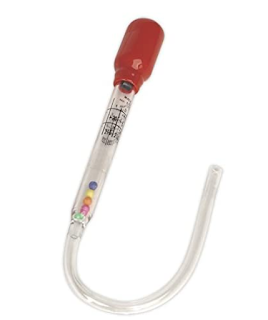
Test your bike for antifreeze

 Make sure you test your vehicle for antifreeze as if your engine freezes it will split the barrel and head and cause a lot of damage.


Buy from Amazon UK here 

Use this tester, remove cap to radiator water and fill it by pressing bulb at top to suck water in. the more balls that float the better protection you have. In the UK you need minimum of 2 balls floating.

See video of this below. 

sorry video removed due to copyright music 

Sunday, 24 January 2021

Cagiva Mito 125 How to test spark plug with multimeter to see if is it is good or bad


Cagiva mito 125 for sale here on Ebay UK


Cagiva mito 125 parts for sale here on Ebay UK


Its a very easy but useful test to make sure your spark plug is ok , you may need to clean the electrode to ensure you get a good reading but all you then have to do is set meter to read ohms and measure from the spark plug cap end to the electrode tip , and then from end to body to make sure no leakage to earth.


Buy Mito 125 NGK spark plugs on Ebay UK 


Get set up turn meter to ohms reading on dial and clean the electrode as below 


Test between end of spark plug where HT lead cap fits and the tip of electrode the reading is very low only 1.2 ohms 


on a dirty part of electrode the reading goes wild and eventually read 188.9 ohms so very bad and to avoid this clean electrode tip 


Next test from spark plug cap end to the body to make sure no earth leakage your meter should read OL which is a good reading as it signals no leakage to earth via the body.

See video of this process below 


Monday, 7 September 2020

Cagiva Mito 125 regulator and charging system testing .


Need a new regulator rectifier try Ebay UK here 


Need generator alternator try Ebay UK here 


First ill show a quick test on diodes inside you regulator rectifier .

You are just checking current flow through the regulators diodes in forward and reverse bias.

Cagiva Mito 125 regulator and charging system testing .


Cagiva Mito 125 regulator and charging system testing .

connect + lead of multimeter to further left connector pin 
and common lead to 2nd pin from left you should get a voltage reading of around 0.6 
here i get 0.52 which is ok

Cagiva Mito 125 regulator and charging system testing .

then test 3rd pin from left it should give same reading 


Cagiva Mito 125 regulator and charging system testing .

now connect common lead of multimeter to left pin and + lead 
of meter to the second pin from left you should get OL telling you no 
current is flowing as it should be.

Cagiva Mito 125 regulator and charging system testing .

Now test with + lead of meter to third pin from left and same OL
no current flow 


Cagiva Mito 125 regulator and charging system testing .

now connect common lead to the further right hand side 
and + lead to second from left you should see 0.6v i get 0.52 which is ok 

Cagiva Mito 125 regulator and charging system testing .

move red + lead to thurd pin from left and should get 0.6v again i get 0.506 which is ok

Cagiva Mito 125 regulator and charging system testing .

Switch + lead to further right pin and touch blue to second and 
third pins and you should get 0L no current flowing 


Cagiva Mito 125 regulator and charging system testing .

That is a quick test the rest of images that follow show tests from Cagiva Mito workshop manual 


Cagiva Mito 125 regulator and charging system testing .

Cagiva Mito 125 regulator and charging system testing .

Cagiva Mito 125 regulator and charging system testing .


Cagiva Mito 125 regulator and charging system testing .